


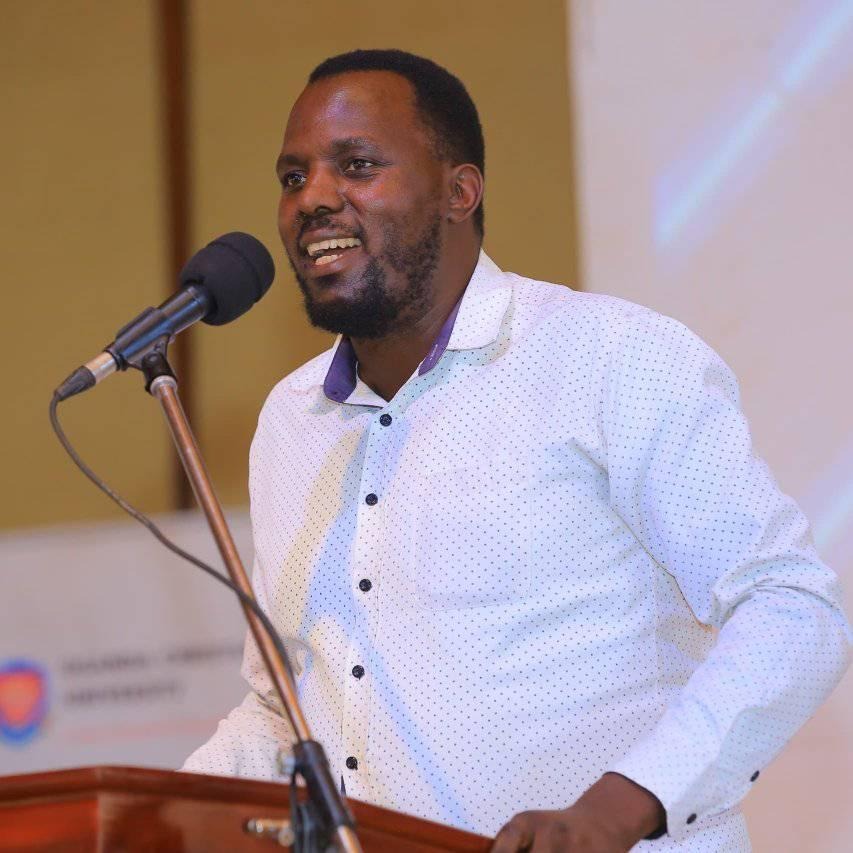
By John Semakula
As soon as the Senior Six results were released on Friday, March 13, 2026 some parents began calling to consult about the courses their children should pursue at university. In this era, when jobs are scarce, parents want to ensure that their children enroll in academic programmes that will lead to good employment after graduation. They are right to think this way, especially after spending millions of shillings on their children’s education from primary school to university or college. As someone in academia, however, I can assure you that there is no bad course. Anyone can live a happy and fulfilling life regardless of the programme they study at university or college. The idea, for example, that sciences are better than arts is misguided. One can live a complete and successful life whether they study arts or sciences.
I studied Mass Communication at Uganda Christian University (UCU) between 2003 and 2006, and I have no regrets. Yet some people still claim that Mass Communication does not pay well. In my experience as a lecturer at UCU, I have also taught many students in journalism who have no regrets about their choice. Many of them now occupy important positions as communication officers in various organisations, including the Parliament of Uganda, the Uganda Revenue Authority (URA), United Nations agencies, ministries, and other government departments. One unique aspect of Mass Communication is that it is among the few professions where, once you acquire the necessary skills, you will find employment. Today, these skills are freely available to students who take their college or university studies seriously.
However, many young people do not utilise their time well before graduating. Instead of gaining practical experience through internships and other opportunities that make them employable, they spend time moving from clubs and bars to hostels of members of the opposite sex. They also ignore advice from parents, guardians, colleagues, and lecturers. At times, they argue that they are mature enough to make independent decisions. Unfortunately, many only realise their mistake after graduation when they begin searching for jobs without the required skills.
Today, many universities have introduced initiatives intended to equip learners with practical skills. Uganda Christian University (UCU), for example, runs a university newspaper, The Standard, which helps journalism and communication students develop their writing, photography, and newspaper production skills. These are exactly the skills employers look for in the job market.
However, as the proverb goes, you can take a goat to the well but you cannot force it to drink. Some students do not take advantage of these opportunities. Instead, they remain in their hostels listening to music and sleeping the whole day. Yet for many of us, the university newspaper launched our careers. I got my first job at the New Vision newspaper as a junior writer in 2010 because of the skills I gained while working for the university newspaper, the Standard. I had learnt how to write compelling news and feature articles, and those skills helped me succeed in the job interview.
The UCU School of Journalism, Media and Communication has also established an online TV channel, UCU Focus TV, with the same objective: to prepare students for employment. Students who actively utilise these platforms and other training opportunities within the University often find jobs soon after completing their studies.
Another advantage of studying journalism and communication is that people in leadership and business depend heavily on publicity. The President of Uganda, Yoweri Museveni, recently promised bloggers Shs5 billion, partly because he benefits from the publicity they generate. The Speaker of Parliament, Hon. Anita Among, relies on publicity to highlight the work being done in Parliament. Every government ministry, department, company, and non-governmental organisation has a communications department responsible for managing publicity. For this reason, journalists and communication professionals should not complain about a lack of jobs, especially if they possess the necessary skills. The same principle applies to all professions: those graduate with the right skills will always find opportunities, sometimes even without formally applying. In my own career, I have moved from one job to another with relative ease because I mastered the craft of writing. Journalism has also enabled me to travel to over 15 countries without paying a single penny. Lastly, we cannot build a democratic society without a strong media system.
Dear parent, your child can study any course and still become successful in life.
The writer, John Semakula, is the Head of Undergraduate Programmes at the Uganda Christian University School of Journalism, Media and Communication. He is also a PhD candidate and a current fellow at the Nordic Africa Institute in Sweden.
