


By Daniella Bagaya.
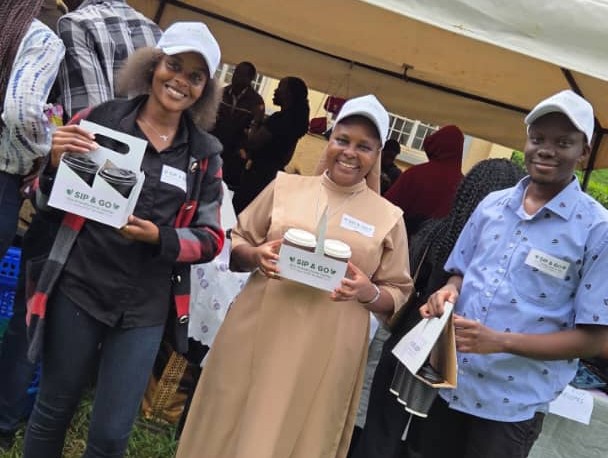
Students from the Bachelor of Business Administration and the Bachelor of Procurement and Logistics Management programs came together on Thursday, 26th March, to showcase their innovative products at Uganda Christian University.
The students had been given three weeks to develop a marketable product as part of a coursework assessment due on that day.
A wide variety of products were showcased, including hair oil, nutritious porridge flour, beautifully crafted handmade perfumes, and custom-designed clothing, among others.
Many students shared insights into how they conceived their ideas and the effort they invested in bringing their products to life.
Rebecca Alepo, a finalist pursuing a degree in Procurement and Logistics Management, highlighted the importance of the regular checks conducted by the lecturer before granting approval for each team’s product.
“We’ve been at it. You see the lecturer; you present your prototype, then she’ll tell you to go back and maybe improve it. You get,” she says.
She attributed this process to the great quality of the products on display.
Rebecca also expressed pride in the craftsmanship of herself and her peers.
“You’re not going to come to a lecturer to present to them something you didn’t make yourself,” she remarks, “You have to get the actual raw material and do it by yourself. By the time you can sell it, you know what you’re talking about.”
Shanita, another procurement student, shared a little bit about their product: a hair care oil called Afro Therapy.
Its formula is entirely natural, made from avocado, rosemary, and cloves, and is packaged in small transparent glass bottles of 50ml and 100ml.
She expressed enthusiasm about continuing production even after the coursework is graded.
“Depending on the sales we’ve made, I’ve so far sold six bottles. I think people have really appreciated the concept, and it’s something we would consider pursuing even after the event,” she said.
Other students shared similar confidence in their products. Susan Mudong, a procurement finalist, showcased a nutritious and highly marketable porridge product called Nutri Soy.
Susan explained that her idea was inspired by the high rates of malnutrition among children in the community, as well as the lack of initiative and financial resources among university students to maintain a healthy and balanced diet.
She also emphasized her intention to differentiate her team’s product by incorporating ingredients not commonly found in traditional porridge products.
“The porridge currently available on the market consists mainly of millet and soya, but it lacks essential vitamins. Our porridge, however, is made from millet, soya, dried tilapia fish, and nakatti (green leafy vegetables),” she explained.
She emphasized that these ingredients give their product a competitive edge through enhanced nutritional value and a distinct taste.
Despite the innovation on display, many students, including Susan, faced several challenges. She noted that the busy examination period placed considerable strain on their production process.
“Product development is always a bit complicated,” she said. “You can hardly find porridge that includes both nakatti and fish. Our product required extensive use of the food and nutrition lab.”
She also recalled instances where the time allocated to her team for product development clashed with lab sessions reserved for human nutrition students.
Other students, such as Shanita, echoed similar concerns about time constraints. She observed that the exhibition was set up in a relatively secluded location, which limited visibility and reduced the number of visitors.
“It was difficult to plan this because people had deadlines and ongoing tests. It’s even test week, we’re still sitting for exams,” she said.
Financial constraints were another common challenge. Mercy Dokini, a first-year Bachelor of Business Administration student, shared her experience of funding her product, Nature Time Wooden Clocks.
“Contributing from our pocket money to invest in this project has been challenging. We’ve all put a lot into it,” she said.
Additionally, some students struggled to find skilled labor to bring their ideas to life. Nancy Juan, also a first-year BBA student, described the difficulty of producing her chicken brooder made from recycled tyres.
Production is challenging because you need help. You have to find people with more experience than you to achieve the final product you envision,” she explained.
Despite these challenges, the students expressed pride in their work and confidence in their products. Many remain hopeful not only of excelling in their coursework but also of continuing to grow and expand their emerging business ventures.
