


By Gift Kalikulali Nangonde
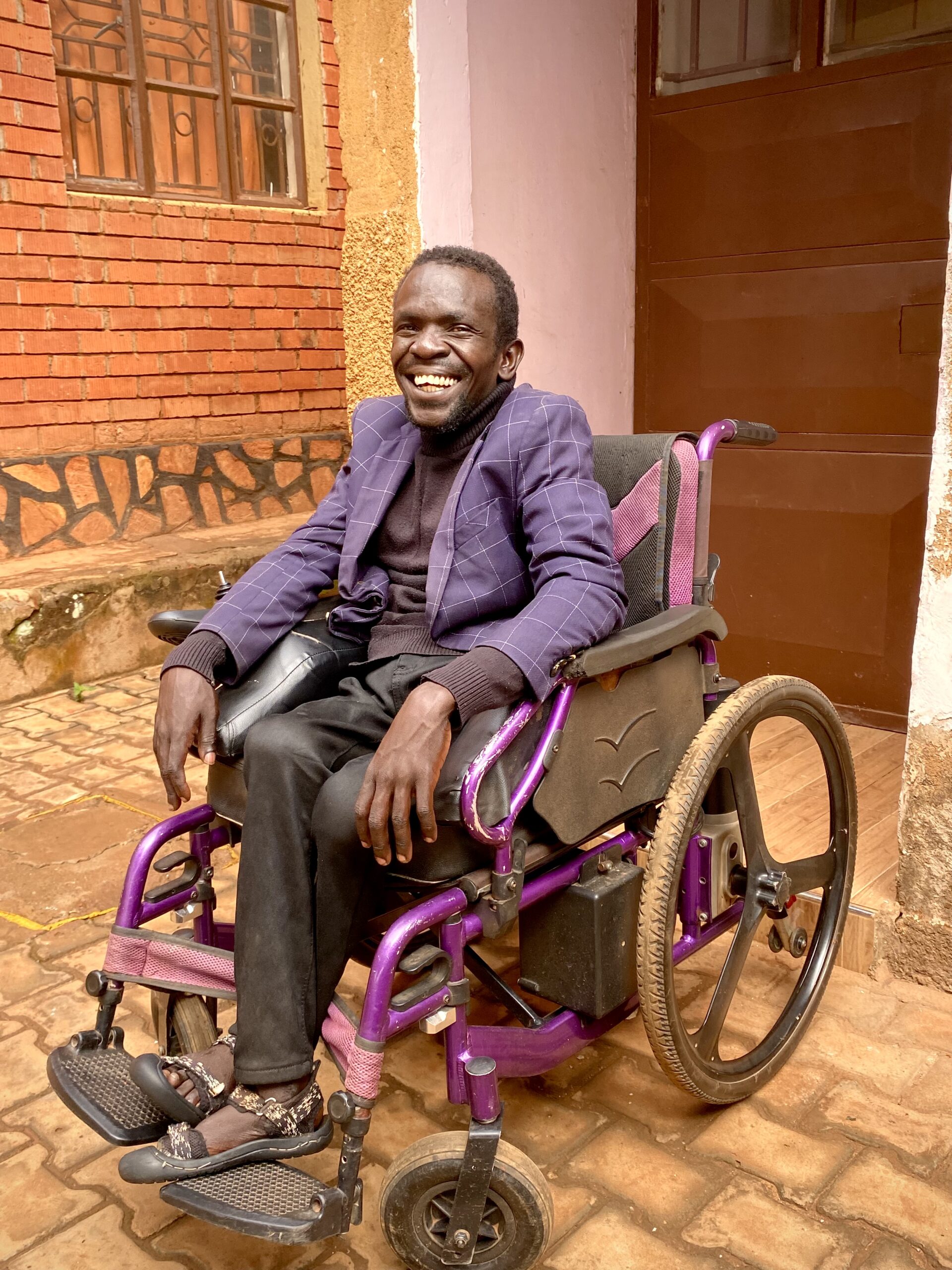
A third-year student at Uganda Christian University (UCU), Lui Theoplus, is using his personal experience with disability, to advocate for inclusion and awareness.
Theoplus, who is pursuing a Bachelor of Arts in Journalism and Mass Communication, says his goal is to become a strong voice for people with disabilities because he understands their challenges firsthand.
“I want people to understand that disability is not inability,” he said, emphasising that society needs to treat people who have disabilities with love, care, and respect.
Theoplus lives with a physical disability that affects his legs, leaving him dependent on a wheelchair for movement.
His condition started when he was still young, at the age of six. It started with a headache. His mother first took him to a clinic in Kimaka, Jinja, where he received treatment and was later referred to Nalufenya Children’s Hospital. He was then taken to Jinja Referral Hospital for further examination, including an X-ray, where doctors said he was normal despite his condition.
Due to the persistence of the illness, he was taken back home, where local herbalists also tried to treat him, but there was still no improvement. At that time, his parents initially believed it was malaria, but later realised it was something more serious when his condition did not improve and he developed pressure sores (wounds that one gets after lying or sitting for a prolonged time in one position). Some people in the village even claimed he had been bewitched.
Years later, when he was finishing his Diploma in Journalism at UMCAT School of Journalism and Mass Communication, Theoplus took it upon himself to do some research and discovered that his condition was polio. This is also when he learned what pressure sores are, and how deeply they affect people. After this discovery, he accepted his condition as God’s will and chose to live positively while educating others.
Theoplus says his education journey has been challenging but inspiring. He began his primary education at Namusaala Church of Uganda Primary School, where everything was normal until Primary Two when he became a person with a disability. He ended up spending a long time out of school while receiving treatment.
When he returned, his teachers and fellow learners gave him a warm reception, which encouraged him. However, the school was not accessible for wheelchair users.
“I had to crawl into classrooms. This made me get wounds on my body, especially around the joints. Sometimes I missed a whole school term because I was nursing the wounds,” he recalls.
Despite these challenges, his teachers remained supportive and would promote him to the next class even when he missed the third term, because he did well academically.
This continued until Primary Six in 2012, when he met two people, Mary Mills and Moses Duche and requested them to help him find a special school where he could better understand disability while learning in an environment with people like him. He was then taken to Kampala School for the Physically Handicapped in Mengo, where he completed Primary Six and Seven. “During that time, I learned a lot about disability, including the rights of people with disabilities,” he shares.
He later joined Greenvine College in Kayunga for his secondary education. At the school, he found that there were stairs at every entrance, including classrooms and dormitories. However, by then he was aware of his rights and spoke to the head teacher, telling him that it was his right to access classrooms and dormitories using a wheelchair and the school’s responsibility to provide access. Within months, the school made adjustments, including improving one washroom to suit people with disabilities and constructing ramps to classrooms and dormitories.
At university, Theoplus says his experience has been generally positive, although it has not been without challenges.
“When I first joined UCU, I underestimated the hilly nature of the campus and was using a manual wheelchair, which required a lot of energy to move around. Later, I acquired an electric wheelchair, which made movement easier,” he says.
Some challenges, however, still persist. “I still face challenges with accessibility. The hardest moments are when lecture rooms are upstairs, yet the university knows there are students who need special support,” he says, adding that access is a major issue across campus, from lecture rooms to entrances.
“For example, wheelchair users cannot easily use some gates such as Tech park gate at Wandegeya, and they are forced to move longer distances to the main gate. Unfortunately, guards have at times informed me that they are not permitted to open the main gates,” he shares. Many times his friends have to physically lift him and the wheelchair to access buildings with stairs or the university gardens.
“I pray that the university eases access at these entrance points and listens more to leaders representing students with disabilities,” he shares.
Despite these challenges, he appreciates the welcoming and understanding nature of lecturers and fellow students, which makes him proud to be part of the university. He says the support he receives through friendships, discussions, and encouragement helps him feel like any other student. He adds that he has managed to cope academically by believing in himself, working with supportive friends, and staying positive without underestimating his abilities.
Theoplus emphasises that everyone has limitations, but that does not make anyone less worthy. He also shares advice with parents asking them to taking any illness seriously and seek proper medical attention early. He also encourages them to support children with disabilities through education.
“Children with disabilities can succeed and become the reason for your happiness,” he says.
Looking ahead, Theoplus hopes to use his journalism career to advocate for people with disabilities and raise awareness about their rights.
“Being a wheelchair user has deepened my understanding of disability,” he said. “My voice does not need a ramp or lift to reach the world.”
