

By Bill Dan Arnold Borodi
The Guild Tribunal of Uganda Christian University (UCU) has nullified the rejection of Keith Basemererwa as Chairperson of the Electoral Commission (EC), ruling that the Guild Parliament’s vetting process was procedurally flawed.
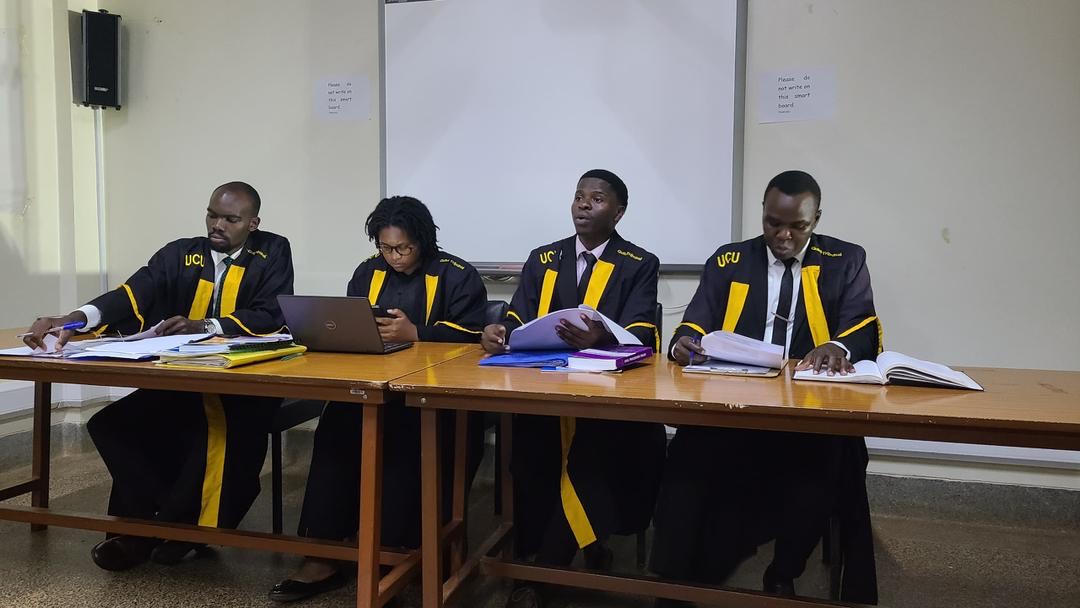
In a detailed 40-page judgment titled “Basemererwa Keith v Attorney General”, the Tribunal led by Chief Justice Paul Nelson Bubolo and Deputy Chief Justice Joan Atukunda, found that the February 27 vetting failed to meet basic legal and procedural standards, most notably because no formal vote was conducted to determine the applicant’s fate.
The dispute began after Basemererwa was appointed EC Chairperson but faced rejection during parliamentary vetting. The Legal Committee, led by Speaker of the Guild Parliament Derrick Kakooza, had declared Basemererwa ineligible for the position, citing academic and integrity concerns, partly based on a memo from the EC. Basemererwa argued he was denied a fair hearing and that the committee acted beyond its mandate.
At the centre of the ruling was Parliament’s failure to carry out a mandatory vote. The Tribunal held that without a recorded decision by Members of Parliament, the rejection of Basemererwa had no legal foundation.
Under normal procedure, according to rule 22 (c) of parliamentary rules, all presidential appointees and ministers must appear before Parliament for vetting. Rule 10 provides for voting in Parliament except as otherwise provided by the Guild constitution under article 58.
Rule 22 c states in part, that “Voting shall be by show of hands, no voting by proxy, the speaker shall have no right to vote in parliamentary committees, the names of those voting for, against and absconding shall be recorded in the minutes whenever a difference of opinion on the proposition occurs and the question proposed for decision in parliament shall be determined by a majority vote of members present and voting in a manner described by rules of procedure.”
The court further found that the applicant was denied a fair hearing, with Parliament relying on allegations, ranging from social media activity to questions about his academic status, that were never formally presented to him for response. An unsigned letter attributed to the Electoral Commission was also used without verification or an opportunity for rebuttal.
In an interview with The Standard following the ruling, Kakooza, defended the process, arguing that the applicant had no enforceable right to the office in the first place.
“What right was violated? That was handled rather unmeticulously, yet it is the heart of the matter,” Kakooza said.
“An applicant nominated by the President but rejected (vetted out) by Parliament, holds no legal right to the office, as approval by Parliament is a mandatory constitutional step.”
Kakooza added, “The applicant has no ground to do the same, he is otherwise a foreign body before Parliament.”
The Tribunal in its ruling also issued strong criticism of Kakooza’s dual role as Speaker and Chairperson of the Legal Committee.
According to the judgment, this overlap created a conflict of interest, with the Speaker simultaneously influencing legal interpretation and presiding over proceedings. The court described this arrangement as incompatible with fair process.
The counsel for the applicant, Joseph Tenywa, who also previously served as Speaker of the Parliament, welcomed the judgment, saying that it is a significant affirmation of justice within the university.
“As Counsel, I am glad that my client Mr. Keith has received justice,” Tenywa said.
“The Honourable Tribunal laboured to explain each legal question, offering students an opportunity to learn that where one’s human rights are infringed or where principles of natural justice are not adhered to, one can seek redress, I look forward to seeing the Speaker of Parliament organise for a fresh vetting session for Mr. Keith.”
The judgment has drawn criticism from some legal observers. Former Tribunal Justice, Isaac Arinda Magi Rugambwa, questioned both the structure and depth of the ruling.
“This judgment, at the face of it, is malnourished, there is no technical bit of drafting, it is just words going to judgment,” Rugambwa said. Drafting a legal judgment is the process by which a judge or judicial officer formally records their final decision on a case, explaining the reasoning, evidence, and legal principles that led to that conclusion.
Rugambwa added, “I don’t blame the bench, they are interpreting issues differently. But I see people joined their minds in one judgment, I don’t think people [other judges] read the judgment of the Chief Justice, otherwise we would have better dissenting opinions, this is not a fashion show, these are legal principles with a clear foundation that forms the justice system.”
Rugambwa further criticized the drafting approach, saying, “When drafting, you don’t need to cite 10 cases to define jurisdiction, go straight to the statutory provision, lay out the elements and that’s it. The expectations of the justices are very high, they can do better.”
In the judgement, the Tribunal quashed the decision declaring Basemererwa ineligible, directed the Guild Parliament to conduct a fresh vetting process, and barred enforcement of the earlier decision.
Photo by Bakiza Ivan
