

By Victor Turinawe
Uganda Christian University (UCU) is set to introduce sign language interpretation as an interdisciplinary course unit under its proposed Competency-Based Curriculum to improve communication with deaf people and promote inclusive service delivery.
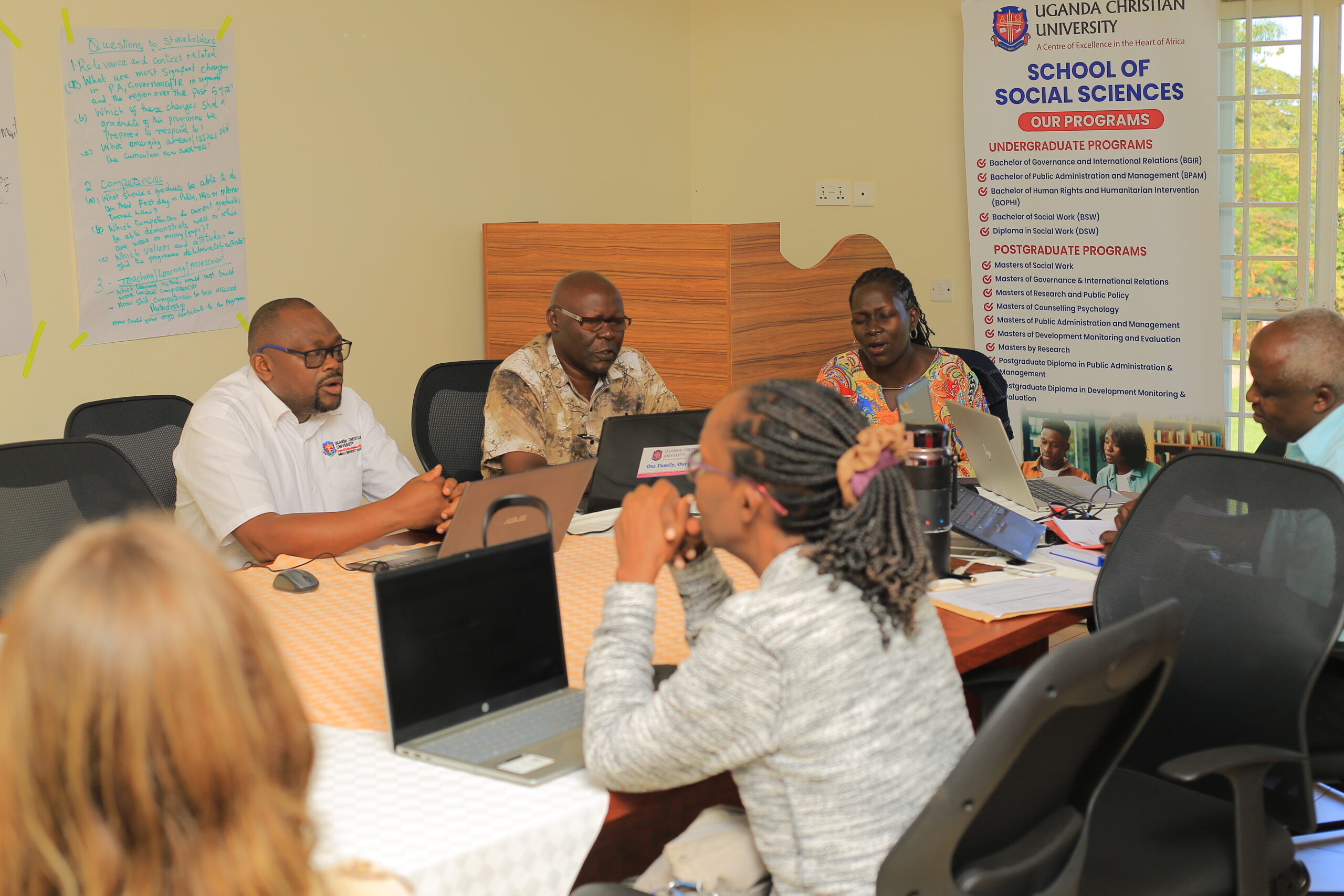
The proposal was adopted on Tuesday, October 13, during a curriculum validation and co-design workshop at the university’s Mukono campus.
The five-day workshop, which runs from October 12 to 16, is reviewing the School of Social Sciences curriculum to align training with professional demands and the needs of communities.
Kasule Kibirige, a tutor in the School of Social Sciences, moved the motion following requests by students who had received informal sign language instruction and wanted the training formally incorporated into the curriculum.
Kibirige said the proposed course would equip students with practical communication skills to work with children and young people with diverse needs.
He said sign language training would also help address barriers that prevent deaf people from participating fully in educational, religious and community activities.
“Students had requested the training be formally incorporated into the curriculum because of its importance in professional practice and inclusive service delivery,” Kibirige said.
He cited limited accessibility in some institutions, including churches, where the absence of sign language interpretation can deny deaf people access to essential information and meaningful participation in activities.
Kibirige said formal training would prepare graduates to communicate more effectively with deaf people and provide inclusive services to children and other vulnerable groups.
Demand for child and youth professionals
At the same workshop, Fred Mukwano highlighted the growing demand for trained child and youth professionals, particularly in organisations serving children and vulnerable communities.
Mukwano said graduates needed specialised knowledge, practical skills and professional values to understand child development, promote child protection and respond to the changing needs of families.
He said professionals working with children should also understand the social systems surrounding them and collaborate with families, schools, churches and other stakeholders to promote their welfare.
“Institutions working with children increasingly require personnel equipped with specialised knowledge and practical skills to respond to emerging challenges,” Mukwano said.
He added that the curriculum should prepare graduates to respond to real-life challenges affecting children and communities.
Call for stronger child protection skills
Prof. Mary Ssonko Nabacwa called for the inclusion of fundamental professional skills to help address child protection challenges, particularly cases of defilement in rural communities.
Nabacwa expressed concern that some cases of child sexual abuse risk being abandoned when professionals visiting affected households receive gifts and fail to pursue the matter.
“In some rural areas, children are defiled. When social scientists visit such homes, they are gifted goats and other gifts, and the story of child defilement ceases there and then,” Nabacwa said.
She called for stronger professional ethics and practical training to ensure that child abuse cases are handled responsibly and that children’s rights and welfare remain a priority.
The proposed sign language course and other curriculum reforms are part of the School of Social Sciences’ efforts to produce graduates with practical competencies relevant to the workplace and community needs.
The workshop, running until October 16, is expected to validate and co-design the curriculum, with an emphasis on professional practice, community impact and the changing demands of the labour market.
