


By Victor Turinawe
Stakeholders participating in the curriculum validation and co-design workshop at Uganda Christian University (UCU) have called for a more practical, community-oriented and technology-driven approach to Social Sciences education to equip graduates with skills that respond to real-world challenges.
The stakeholders emphasised the integration of artificial intelligence (AI) and other emerging technologies into teaching and professional practice, improved dissemination of research findings, stronger partnerships between universities and practitioners, and the development of academic programmes that address local and international needs.
Among the participants were Ernest Matsiko, founder and Executive Director of Children Alwe Ministries (CALM); Gerald Okiria, a Children Specialist at Compassion International; Beatrice Nakkazi a UCU student; and Dr Joy Asiimwe Turyamwijuka, a lecturer at the university, among others.
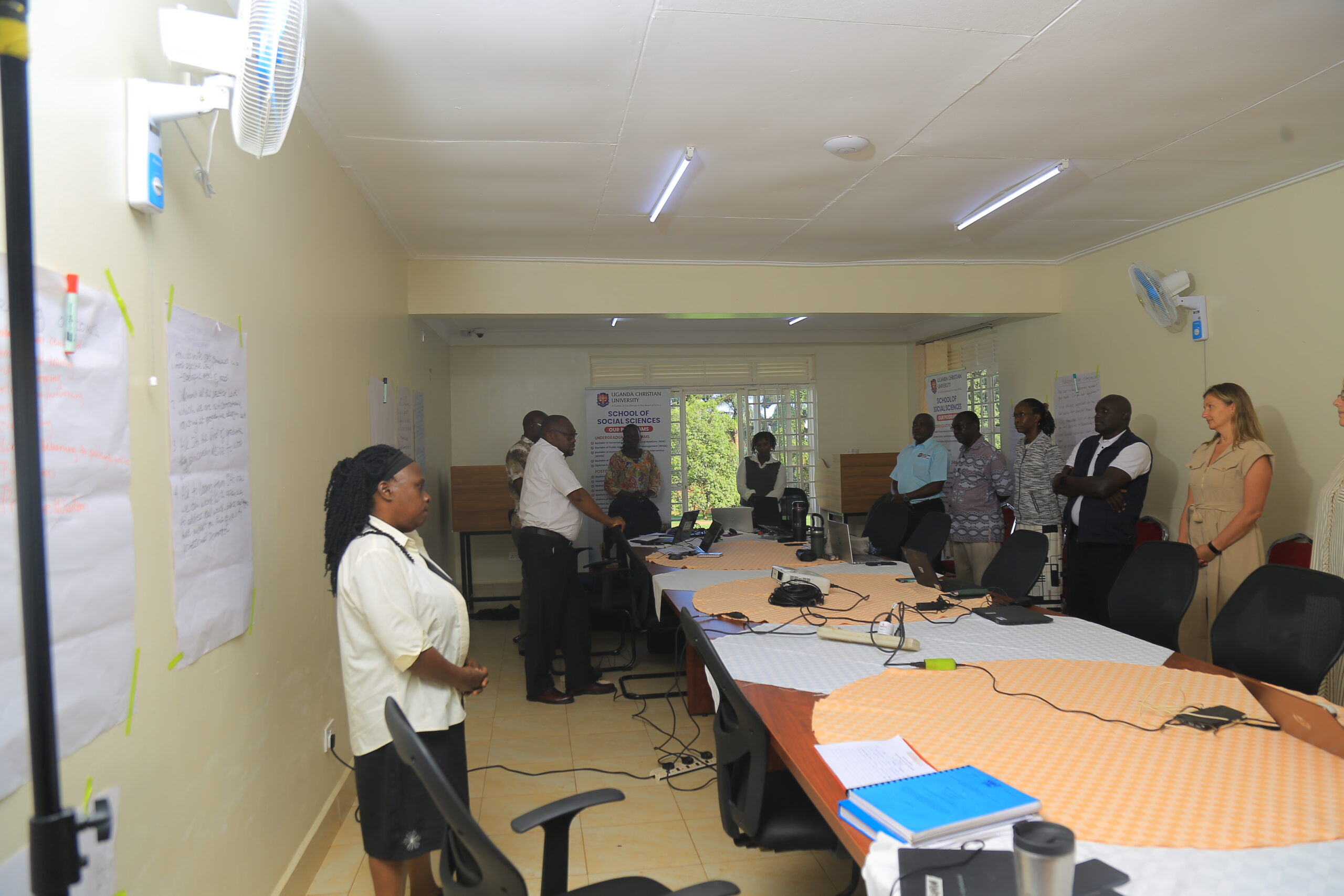
The discussions took place on the third day of the ongoing curriculum validation and co-design workshop, which is reviewing Social Sciences programmes to strengthen professional practice, community impact and graduates’ preparedness for the changing demands of the workplace.
During discussions on Social Work, Okiria, who represented the Social Work group, said participants had identified technology integration, research dissemination and the need for a common understanding of the profession between government and practitioners as key areas requiring attention.
He noted that research conducted by universities should go beyond academic publications and reach the institutions, professionals and communities that could benefit from its findings.
“Research conducted by universities should not remain on library shelves but should be disseminated through appropriate platforms to reach institutions, practitioners and the wider community,” Okiria said.
The stakeholders also urged lecturers to prioritise community needs when developing and delivering course content, arguing that university education should prepare students to address practical challenges rather than focus exclusively on academic requirements.
Matsiko called for more interactive teaching methods, including role-playing, demonstrations and practical exercises, to help students develop interpersonal communication, public speaking and other professional skills.
He emphasised that such approaches would enable students to gain practical experience and become better prepared to apply their knowledge in professional settings.
The participants further called on the government to provide relevant policy documents and other materials outlining its understanding of the Social Work profession. They said a shared understanding would help bridge gaps between policymakers and practitioners, improve collaboration and strengthen the delivery of social services.
The stakeholders also raised concerns about the need for a clearer legal and policy framework to guide social work practice, arguing that legislation would help define professional responsibilities, establish standards and strengthen accountability.
They cited Nigeria and Kenya as examples of African countries with legal frameworks governing aspects of social work practice, calling for further attention to the development of appropriate legislation and professional guidance in other countries.
The discussions also highlighted the broader need to bridge the gap between theoretical learning and professional practice through practical training, mentorship and stronger engagement between universities and organisations working directly with communities.
UCU Deputy Vice-Chancellor for Academic Affairs, Associate Professor John Mulindwa Kitayimbwa, said traditional approaches to teaching and assessment needed to change to equip students with the competencies required to address emerging social and economic challenges.
“UCU is rethinking its approach to university education, with a renewed emphasis on practical skills, research, innovation and community engagement to prepare graduates for the changing demands of the workplace,” Prof Kitayimbwa said.
He emphasised the importance of bringing together academic scholars, professional practitioners and people with lived experience to contribute to curriculum development and ensure that university programmes reflect the realities graduates will encounter in their careers.
The third day of stakeholder engagement also examined several other areas, including bridging the gap between theory and practice, child development, practical training and mentorship, as well as governance and international relations.
The workshop is part of UCU’s ongoing efforts to review and co-design its curricula in collaboration with stakeholders, with the aim of ensuring that academic programmes remain relevant to the needs of society and the evolving demands of professional practice.rewrite this story in Uganda Daily Monitor style
