


By Victor Turinawe
Stakeholders attending a Master of Transformation Development programme on biblical justice, human rights and advocacy have called for the amplification of marginalised communities’ voices, stronger accountability and greater involvement of local communities in peacebuilding and conflict resolution.
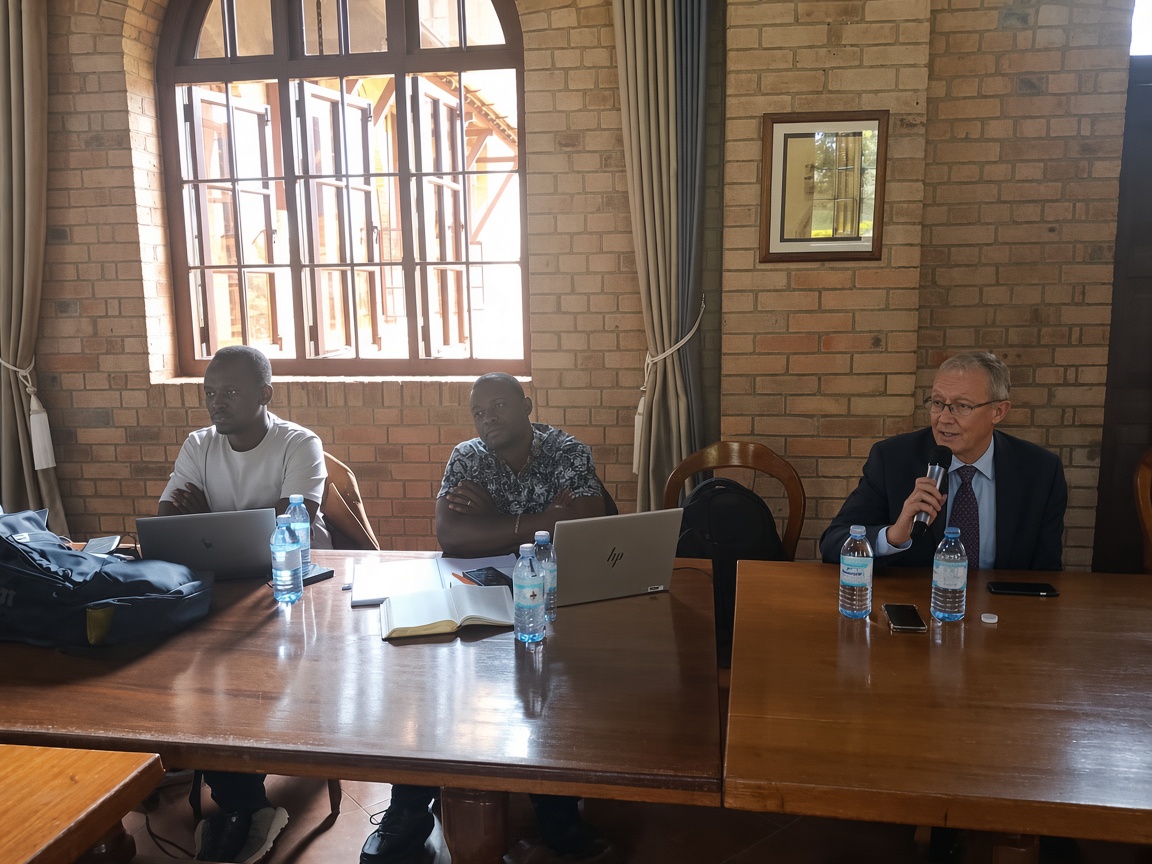
The call was made during a two-day engagement hosted by Uganda Christian University (UCU) at its Mukono Campus from October 15–16, 2026. The event brought together academics, church leaders and students from across Sub-Saharan Africa to examine the role of biblical principles in promoting justice, protecting human rights and tackling societal challenges.
Participants included Dr Richard Butura of the Community Transformation Centre in Kenya, Professor Andrew Omona of UCU, Dr Stella Laloyo from Gulu, Paul Boson, Reverend Walter Ocen Onen, Muthomi Mwiti and students from Lusaka, Zambia, who joined virtually.
The engagement followed a public lecture on Thursday, October 15, delivered by Justice Mike Chibita on biblical justice, human rights and advocacy.
The programme, jointly run by Eastern College Australia in Melbourne and Uganda Christian University, brings students from different African countries together twice a year—in April and October—for lectures and discussions on transformation and development.
During a question-and-answer session, participants debated whose voices should shape the pursuit of justice, questioning whether governments, courts, churches or affected communities should hold the greatest influence in determining justice and accountability.
They also examined the effectiveness of truth commissions in addressing past atrocities, discussing whether such processes promote healing and reconciliation or risk silencing victims.
Dr Stella Laloyo stressed that the voices of victims and other people whose rights have been violated must remain central to transitional justice processes.
“People who have experienced conflict and human rights violations understand the consequences of those abuses and should therefore have a meaningful role in determining how justice is pursued,” she said.
She cautioned against allowing governments or powerful institutions to dominate discussions about justice, especially where state actors may themselves be implicated in human rights violations.
“Marginalised communities have increasingly raised their voices to demand justice and accountability from political leaders and other authorities responsible for protecting citizens,” Dr Laloyo explained.
She added that transitional justice should also give alleged perpetrators an opportunity to explain their actions and respond to accusations.
On the role of church leadership in promoting social responsibility, Dr Richard Butura said religious leaders must recognise that their duties extend beyond meeting the spiritual needs of their congregations.
“Church leaders should be empowered to become influential community leaders capable of addressing social challenges through their moral authority, spiritual guidance and engagement with the public,” he said.
He noted that church leaders regularly interact with communities through services and other activities, giving them a platform to influence public attitudes and encourage collective responsibility.
Dr Butura observed that some believers limit their faith to church activities rather than applying it to wider community life. He called for a broader understanding of faith that encourages Christians and church leaders to actively confront injustice and promote community welfare.
Programme coordinator Reverend Walter Ocen Onen said the activities focused on examining the role of Christians in addressing injustice, promoting human rights and advocating for social change.
He said the programme gives students an opportunity to reflect on the structural challenges and systemic causes of injustice across the continent.
“As Christians, we should be engaged in this prophetic narrative and work for justice and advocacy in our communities and countries,” Reverend Ocen Onen said.
He added that the lectures and academic engagements are designed to deepen students’ understanding of justice and inspire them to take an active role in addressing social challenges.
The programme brings together participants from across Sub-Saharan Africa to share experiences and perspectives on how Christian values can guide efforts to promote justice, human rights, accountability and sustainable transformation in their communities and countries.
