


By Nathanael Simbilyabo
A final-year Food Science and Technology student at Uganda Christian University, Emmanuel Golyo says his interest in tourism began in childhood, when he would show visitors around his village.
His passion for photography took the interest further. He began photographing and filming nature and wildlife while working with different tour companies.
Much of this work was voluntary, giving him an opportunity to learn about wildlife, nature and tour guiding.
He also worked with organisations such as Volunteer to the World and Hope Hearts, where he helped manage incoming volunteers.
Two clients, a couple he had guided while working under another tour company, encouraged him to start his own business after learning that he was volunteering.
They later referred other travellers to him, while his photographs and videos of trips shared online attracted more inquiries that gradually turned into bookings.
“When they asked me how much I was earning, I told them I was volunteering because it was my passion and because I wanted to tell the story,” he says.
“I realised that I could make money out of passion,” he says.
Golyo continued learning about tourism through online courses focused on wildlife and nature guiding, including courses offered by the Uganda Wildlife Authority (UWA) and the Uganda Tourism Board (UTB). He was eventually assessed and licensed as a tour guide in Uganda.
He began operating independently in 2017 with a camera, photographing nature and wildlife while learning from tour companies and volunteering. As bookings increased, he decided to formalise the business.
Starting the business
In 2023, he registered Golyo Safaris with two friends who later became the co-founders of the organisation: Arthur Katura handles finances and legal matters, while Edmond Alinga, who oversees logistics and operations.
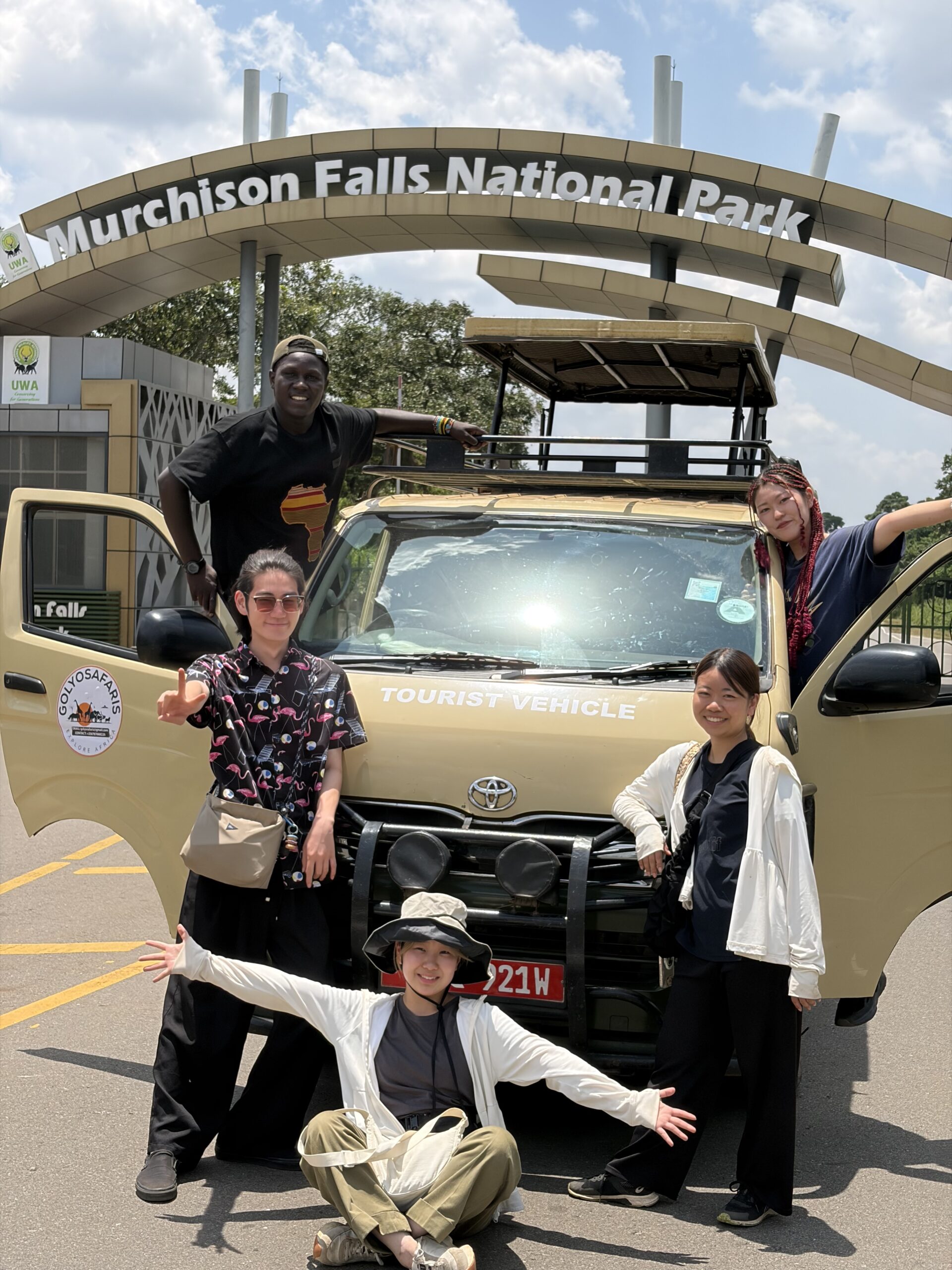
Today, Golyo Safaris organises wildlife safaris and cultural tours, arranging transport, accommodation and driver-guides for clients. Its packages are tailored to travellers’ interests, budgets, group sizes and length of stay.
The company also offers standalone services, including safari vehicle rentals, mountain bike adventures, photography equipment, camping equipment, private tour guides and group transportation.
According to its website, safari vehicle rentals start at US $150 (approx Shs600,000) per day, mountain bike adventure at US$100 (approx Shs400,000), photography equipment at US$200 (approx Shs800,000) per day, camping equipment at US$100 (approx Shs400,000) and private tour guides at US$100 (approx Shs400,000) per day. Group transportation starts at US$200 (approx Shs800,000) per day.
Clients can select destinations and packages through the website, where itineraries and prices are listed.
The company has expanded beyond Uganda, with teams operating in Kenya, Tanzania and Rwanda. Today, Golyo Safaris works with a team of about 20 people, some of whom have studied tourism more deeply than he has.
Telling Africa’s story
But Golyo says tourism is not simply about taking people from one destination to another.
“I choose to tell the story of Africa,” he says.
He believes much of the story about Africa that reaches the outside world focuses on poverty, corruption and other negative experiences. His response is to show visitors another side of the continent.
“I am determined to market the positives about Africa,” he says.
But building the business has not always been easy.
Golyo recalls a client who had planned to spend only three days in Uganda. Unfortunately roads were closed because the President was passing through the area. They waited for almost five hours.
The COVID-19 lockdown brought another challenge. One of his clients was in Uganda when restrictions were imposed and could not leave for another two weeks. Golyo says he used money from the business to support the client during the extended stay.
Asked how he manages to run both the business and be a full-time student, Golyo says he attends classes during the week and often travels with clients over the weekends.
He delegates responsibilities to his team, which manages tasks such as marketing, reservations and tour guiding, allowing him to oversee the business while pursuing his studies.
“I knew being in business would have an impact on my academic performance,” he says.
But he did not see that as a reason to abandon the business.
“I shouldn’t confine myself to what I am studying alone,” he says.
For Golyo, food science and tourism are not mutually exclusive. His degree has given him knowledge in quality control and product development. He plans to produce food products, including coffee, and sees tourism as one way of connecting those products with visitors from around the world.
Registering growth
Golyo says registering and licensing the company in 2023 improved its organisation and credibility. It also enabled the business to participate in tourism stakeholder meetings organised by government institutions, where it engages with other industry players and learns about developments in the sector.
For Golyo, however, the company’s growth is not measured by money alone. He considers the trust of clients, the dedication of his team and the growing interest from international partners willing to work with the business among its greatest achievements.
His long-term vision is to expand beyond tours into lodges and hotel accommodation where visitors can stay as they explore the region.
“The idea is to come up with something where the visitors will be able to enjoy Africa and Africans will be proud of and take responsibility for their own countries.”
For now, Golyo continues to divide his time between the laboratory and the road, between Food Science and tourism.
