

By Michael Ainomugisha
Africa heads into the knockout stages of the 2026 FIFA World Cup with more teams, greater expectations, and a growing debate over identity, migration, and the future of football on the continent.
For years, African nations have struggled to make a lasting mark on football’s biggest stage. At the 2018 World Cup in Russia, none of the continent’s five representatives reached the knockout stages. Across 15 matches, they managed only three victories, leaving many questioning whether Africa was falling behind the world’s elite.
Four years later, the script changed.
Morocco became the first African nation to reach a World Cup semi-final in Qatar, defeating football giants and rewriting history. Their run offered proof that African teams could compete with the best when talent, planning, and belief came together.
The 2026 tournament, jointly hosted by the United States, Canada and Mexico, has offered another opportunity for Africa to build on that progress.
With FIFA expanding the competition to 48 teams, Africa secured 10 places, double the number available in previous editions. Nine of those teams advanced beyond the group stage, with only Tunisia falling short. Cape Verde, Egypt, Ivory Coast, Morocco and South Africa qualified as group runners-up, while Algeria, DR Congo, Ghana and Senegal advanced after finishing third in their groups.
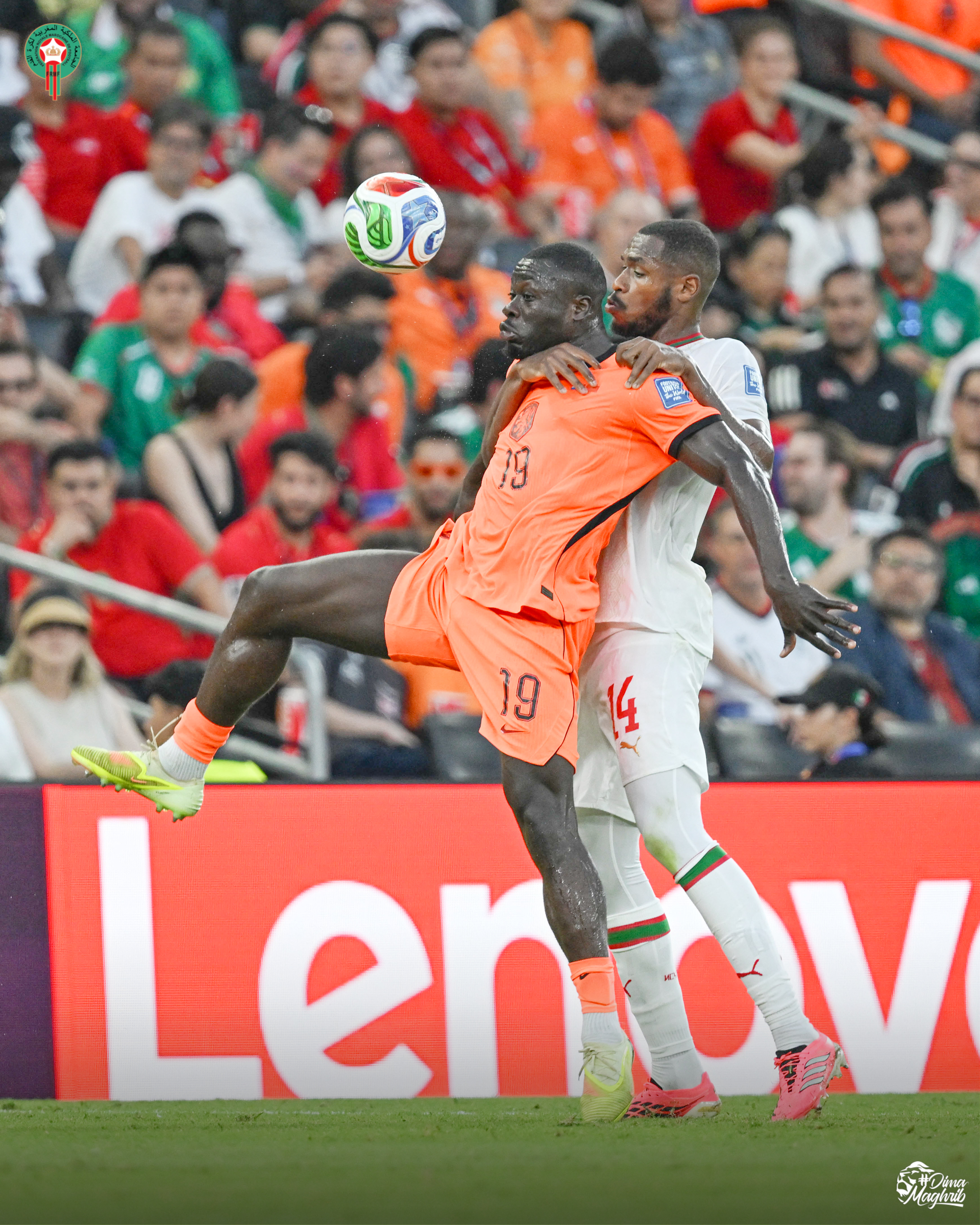
Morocco and Egypt are the teams from the continent to have qualified for the round of 16, once again carrying the hopes of Africa in the round of 32. The Netherlands were beaten 3-2 in a dramatic penalty shootout, and Egypt defeated Australia 4-2 in penalties.
The results show progress, although they also underline how difficult it remains for African nations to compete consistently against football’s traditional powers.
Beyond the results, however, this World Cup has highlighted another story. It is one about identity.
Almost one in every four players at the tournament represents a country other than the one where they were born. Only eight of the 48 participating nations have fielded squads made up entirely of home-born players.
No African team reflects this shift more than Morocco.
In their opening match against Brazil, Morocco fielded 11 foreign-born players, the highest number by any team in a World Cup match. Many of those players grew up in European countries before choosing to represent the land of their parents or grandparents.
The trend is becoming common across Africa.
Senegal, Cape Verde, Algeria and several other nations have increasingly relied on players raised in Europe, many of whom developed in some of the world’s strongest football academies before wearing African colours.
Speaking on the BBC Africa podcast, former South African international Matthew Booth said the decision over which country to represent is deeply personal.
He argued that family relationships, career opportunities and exposure all influence modern footballers. Patriotism, he believes, no longer carries the same weight it once did.
“Football is a short career,” Booth said, noting that players often consider where representing a country could improve future contracts and visibility.
Still, Booth questioned players who wait until a nation qualifies for a major tournament before declaring their allegiance.
Supporters often question whether players born abroad share the same passion as those raised on the continent. Others argue that birthplace should never determine commitment.
Speaking on the same podcast, migration researcher Miriam Chetty offers another perspective, describing the changing face of international football as a transformation rather than a decline in national identity. She also pointed to Morocco as an example of how diaspora recruitment succeeds when combined with long-term investment in domestic football.
