


By Nathaneal Simbiliyabo
Last week, on a calm Thursday, 21 May 2026, the School of Social Sciences at Uganda Christian University hosted an international delegation from partner universities in the United States during a faculty study tour under the Uganda Studies Program.
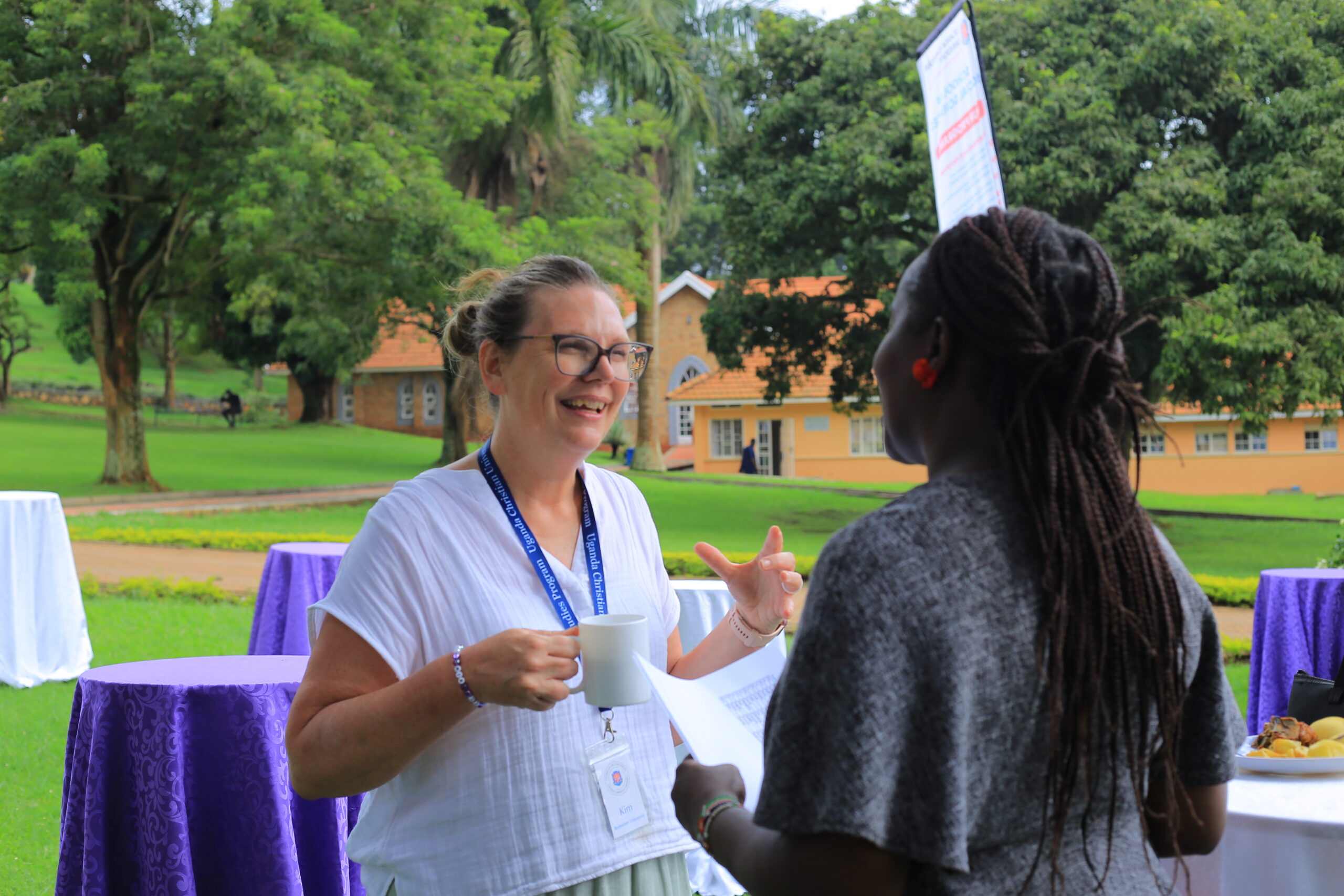
The meet-and-greet brought together lecturers, administrators, and staff in an informal setting designed to encourage conversation, interaction, and exchange of ideas. Rather than formal presentations, participants moved between round tables and small group discussions, engaging in continuous conversations on research, teaching, student exchange, and community engagement.
The delegation included 14 representatives from universities in the United States, among them Bethel University, Cornerstone University, John Brown University, Liberty University, Messiah University, and Redeemer University. Some of the institutions already send students to UCU for semester exchange programs, while others visited to explore new opportunities for collaboration.
Faculty members from across UCU, including Public Health, Education, and Social Sciences, also joined the discussions, contributing to a wide exchange of ideas across disciplines and experiences.
During the conversations, questions emerged around the sharing of the experience, methods and techniques of teaching and how international academic engagements are often perceived, particularly the assumption that partnerships involving Western institutions are one-sided. However, participants emphasised a more collaborative reality shaped by shared learning and mutual engagement.
In response, Dr. Bob Aronson, Professor of Global Health and Human Needs at Messiah University, said the engagement should move beyond introductions into sustained academic cooperation.
“We need to further these conversations beyond the meet-and-greet to actual research partnerships, research engagements, and teaching opportunities,” he said.
He added that the delegation was also keen to engage with ongoing research work at UCU rather than set external agendas.
Speaking during the opening of the engagement, Dean of the School of Social Sciences Dr. Jonathan Tumwebaze welcomed the visitors and encouraged open exchange across institutions.
“We hope that this engagement will develop into stronger research partnerships, teaching opportunities, and even fellowships. This may not happen immediately, but we are casting a vision for what future collaboration could look like,” he said.
He noted that such engagements reflect a growing shift in academic collaboration, where universities engage not only through formal agreements but also through direct interaction and shared experience.
Representatives from the Directorate of Research, Partnerships and Innovation also highlighted the university’s commitment to strengthening global academic networks that support research, innovation, and intercultural learning.
As conversations and coffee moved across tables and groups, participants exchanged contacts, ideas, and opportunities for future collaboration in an atmosphere that remained open and informal throughout the afternoon.
Far from a formal ceremony, the gathering reflected a growing reality in higher education, that meaningful academic partnerships are built not through speeches, but through conversation, shared curiosity, and human connection across campuses and continents.
