


By Victor Turinawe
The Minister of State for Primary Health Care, Hon. Margaret Muhanga Mugisa, has urged individuals and institutions to support various stakeholders in ensuring the health of mothers across the country.
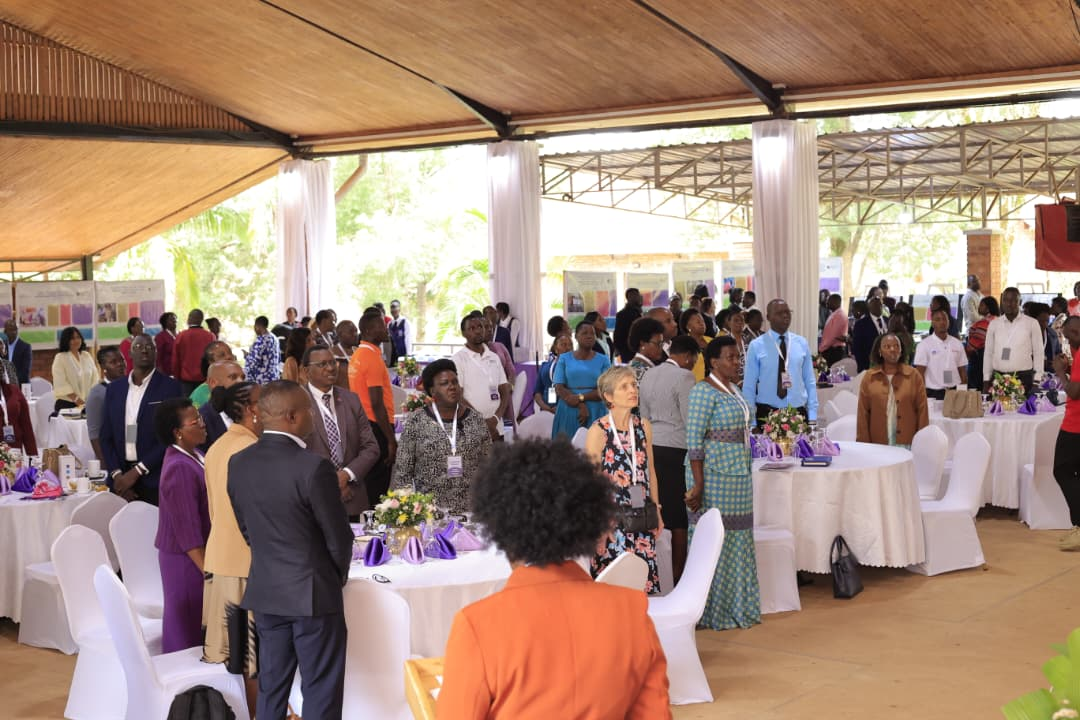
“Policy alone does not save lives. We also have to contribute at an individual level. The research you generate, the communities you engage and the change you implement are central to achieving national priorities,” Muhanga said. This was during the Save the Mothers Annual Maternal and Child Health Conference held at Uganda Christian University (UCU) at Nkoyoyo Hall, UCU Mukono Campus.
Muhanga also charged the education institutions to keep generating research. “We need our universities to lead in evidence generation and leadership development. You lead, we all follow,” she said.
At the event, Prof. Jerome Kabakyenga, the founding Director of the Institute of Maternal, Newborn and Child Health, at Mbarara University of Science and Technology, called for reaffirmation of community-based approaches in strengthening health systems and improving health outcomes.
“Improving maternal, newborn, and child health requires full stakeholder engagement, collaboration across all levels (national, district, community), dedicated time and expertise, and tailored, context-specific interventions,” Prof. Kabakyenga emphasised.
This approach, he said, ensures continuous learning and improvement, strong partnerships across sectors (health, education, community), community ownership, which is critical for sustainability, and effective monitoring and evaluation of systems, hence leading to better service delivery.
Muhanga in her remarks also highlighted the importance of everyone supporting Save the Mothers. “A pregnant woman can produce and raise a child alone even when the father dies, but when a pregnant woman dies, she also dies with the unborn child. Therefore, mothers are givers of life,” she said.
Gorreti Aanyu, a special needs education teacher at Hand in Hand Uganda, thanked Save the Mothers organisation for developing programmes that support and empower children with special needs.
“The programme has reached 209 schools, impacting approximately 380,000 people. As a result, thousands of opportunities have been created, including jobs in education, school support services, part-time employment, and placements in public institutions,” said Aanyu.
At the end of the conference, delegates also demonstrated projects that have been implemented to boost the objectives and goals of Save the Mothers.
