


By Victor Turinawe
The Dean of Postgraduate Studies and Research at Kamuzu University of Health Sciences (KUHeS), Prof. Fanuel Lampiao, has urged PhD supervisors at Uganda Christian University (UCU) to place greater emphasis on identifying research gaps to help students position their research projects within the existing academic landscape.
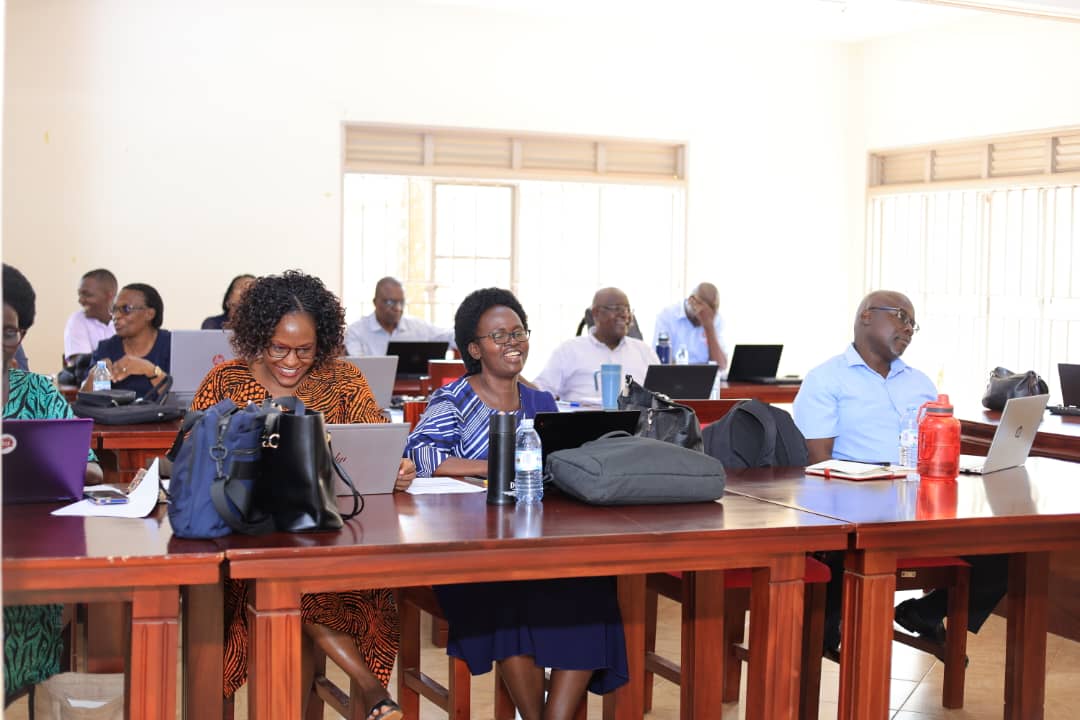
Prof. Lampiao made the remarks during a three-day PhD Supervisors Training Workshop held at UCU’s campus in Mukono Municipality from August 25 to 27, 2026 which was organised under the theme, “Why We Need PhD Professionals in Sub-Saharan Africa.” The training sought to strengthen the capacity of PhD supervisors in Eastern Africa by equipping them with approaches to improve doctoral supervision, research quality, knowledge generation and the overall completion of PhD studies.
Lampiao emphasised that supervisors have a critical responsibility to guide doctoral candidates in identifying gaps in existing literature and developing research projects that contribute new knowledge to their respective fields.
“As a supervisor, your responsibility is to help the student identify research gaps through drawing a reading map, techniques for positioning a research project within the existing academic landscape, and identifying key areas, trends and emerging topics,” Lampiao said.
He further advised supervisors to ensure that students formulate clear and relevant research objectives after establishing the gap between their proposed research and existing studies.
Lampiao explained that students should thoroughly review previously published theses and other academic literature related to their topics before defining their research objectives, particularly in areas where limited literature exists.
“Students must formulate research objectives after understanding the research gap between their research topic and already published theses relating to their research topic, for instance, where there is not enough literature about their topic of study,” he said.
Another facilitator, Associate Professor Emmanuel Mutungi, the Dean of the School of Art and Industrial Design at Kyambogo University, encouraged supervisors to pay attention to the personal orientation of PhD candidates and help them narrow down broad research topics into manageable areas of study.
Mutungi noted that effective doctoral supervision changes according to the stage of a student’s research journey, requiring supervisors to adjust their guidance and support depending on the challenges and needs of individual candidates.
“Good supervision changes over time. Different phases require different forms of guidance, challenges and support,” Mutungi explained.
One of the workshop participants, Dr Faith Musinguzi from the UCU School of Education, highlighted some of the challenges supervisors face, including handling large numbers of doctoral students and working with candidates who choose research topics but struggle to identify the specific problems their studies should address.
In response, Mutungi advised universities to establish clear and well-defined admission criteria for PhD candidates to ensure that those admitted are adequately prepared for doctoral-level research.
He cited Kyambogo University as an example, noting that the institution had stopped admitting PhD students for two years before reopening admissions, after which 164 applicants applied.
The workshop was supported by the Empowering Academic Supervision Training in Eastern Africa: Sparking Potential, Advancing Research and Knowledge (EAST-PARK) research initiative.
