

By Elvis William Segawa
Nobody throws a big party to celebrate 64, years. I mean 64!!!
Maybe 18. There we get the noise, the national ID and the feeling that we now run our own lives (we don’t, but it feels nice). Fifty gets the gold and the band, one can always have a bunch of musicians over at home to sing for them and all that. But 64?… People just ask if you have eaten. It is an odd, odd age, and I like it. I like it because it is the age where we sit down, take off our shoes and ask ourselves, with all honesty, where have we reached, for all we know retirement is just a year away. This Friday, 9 October, Uganda turns 64. Kololo will be loud and proud, as it should be, of course, but before the noise starts I want to sit with my own people, my generation, and talk ko small small.
I have been watching us for a while. The boda-boda stage arguments that could solve the economy if only someone would listen. The lecture hall where everyone is quiet until the lecturer says “any questions?” and suddenly the ceiling becomes very interesting. And the WhatsApp groups where a “mbu” can travel across Mukono before the truth has even found its shoes.
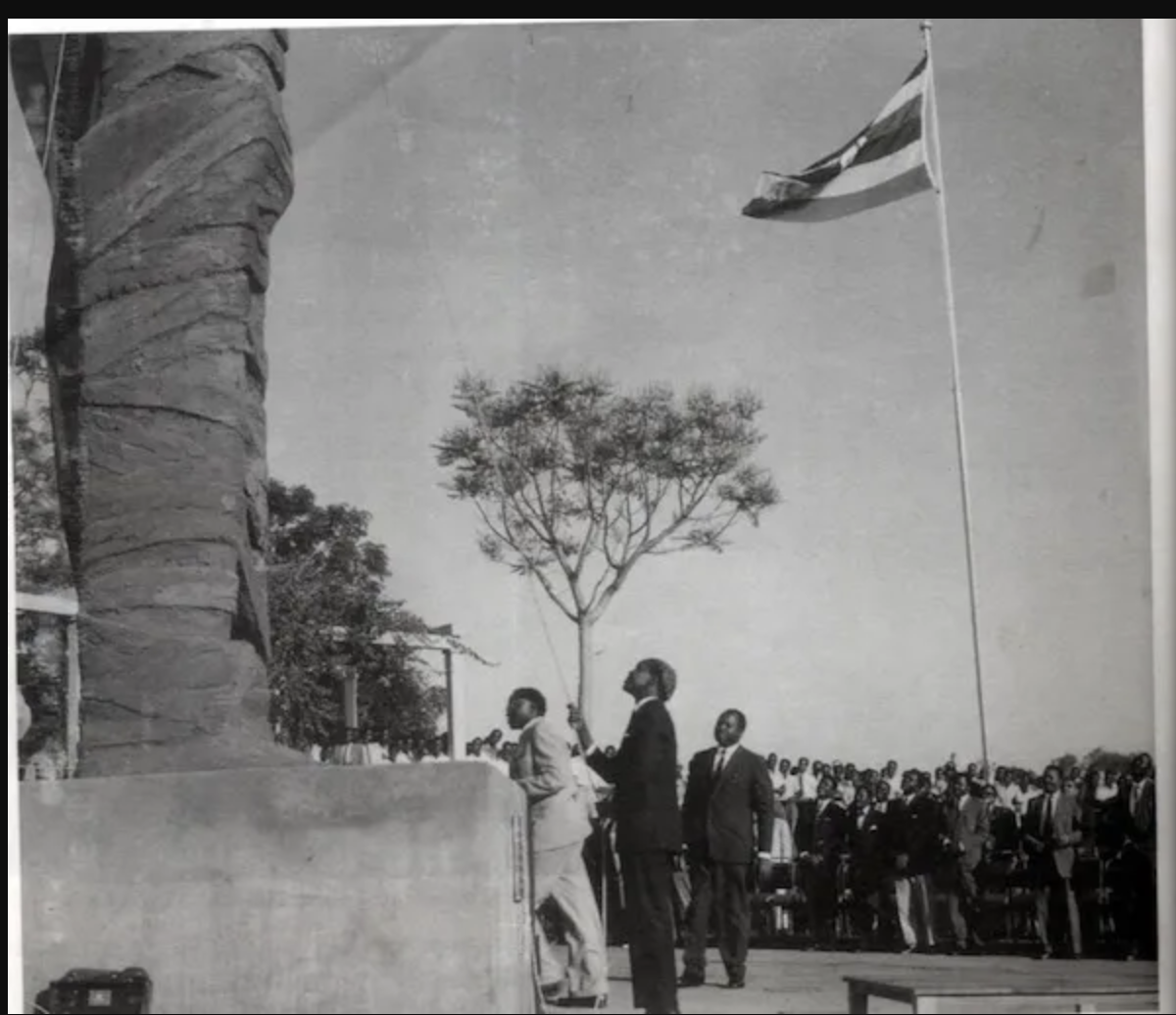
Since I am an economist, I cannot watch without counting. So here is a number; about three in every four of us are under 30. Three in four, bannange! The people who watched the flag go up in 1962 are grandparents now, so whatever this country becomes next, it will be us doing the becoming. That should excite us a little. It should also scare us a little. Both are correct and good.
Our forefathers, and mothers, did not fail us. They did the hard part, they stood up when standing up had a price, and they handed us a flag, an anthem and a name that is ours. We did not fight for any of it, we were just born into it, like inheriting a house that was built and paid for before we showed up. No shame in that. But a house we inherit and never repair starts to leak, and one day it rains on our heads and we look up shouting, “Who stole my roof?!” The answer is nobody. It just needed us.
Remember P4 Social Studies, when we all learnt what the colours of the flag mean? Nobody ever told us about the bird. On Friday the flag will be flown everywhere. Right in its middle sits the Crested Crane, one leg planted and the other one lifted. For years I thought it was just a pretty bird showing off. Now I think it is the most honest thing on the flag, because it is caught in the middle of a step. Such a foot in the air has to land somewhere, and I believe our generation is the one that decides where.
The flag is the symbol of our political independence, one that we got in 1962. Mental independence is different. We build it ourselves, brick by slow brick. We can sing the anthem louder than the whole stadium and still believe whatever the forwarded message told us this morning, the one that said “share with 10 people”, and we did, because what if? I have done it too, dear reader. No pointing fingers here, only mirrors. Freedom of the mind is a daily habit, and it consists of three things—reading, writing, and questioning. None costs money. None needs a permit.
Read. Most of us can read, and that is real progress. But being able to read and actually reading are different animals, a bit like owning running shoes. When did you last finish a book that was not on a course outline? Ten pages a day gets us a book a month. We lose more time than that on our phones before the first Ddembe rola of the day. I know a guy who was dragged to a small book club because he was bored. First month, he just listened. By month three he was arguing about a chapter with people he had just met, and by the end of the year he was running the club. Nothing changed in his life except that he started thinking out loud around other people. That was enough.
Write, yes write. An essay, a poem, a business plan, a line of code (with or without Claude), even a very well organised complaint to hostel management (those count, and some are literature). If we do not write our own story, somebody far away will, and they’ll get all the details wrong. They will say we are one thing, when we know we are a hundred things at once.
Ask questions, and always with respect. Where does this number come from? Who funded the research? Who said so? That is all statistics really is, a polite way of saying “show me your work.” We can question an idea and still respect the mzee who came up with it. Challenging what our elders built is one of the best ways of respecting it.
The hard part is already done. Our forefathers won us the right to run our own country before most of us could even talk. What is left is smaller and much closer to home. Paying tuition, getting the first job, kuyiliba mu, and paying the little bills that show up at the end of the month. Nobody is asking us to go to war, or to fix the whole country in one go. Start small and start near. A study group that actually meets counts. A business idea written in a notebook counts. Having a phone repair shop near campus counts. A country gets built this way, by people who keep showing up for the small things.
While writing this I kept picturing one campus, say ours, doing this well for a year. If 100 students each read one book a month, that is 1,200 books in a year. If the same 100 students each came up with one idea a month, that is 1,200 ideas that did not exist before. Now do that in every university, every secondary school and every trading centre, and you will have something nobody can ignore.
So this Friday there will be no lectures, there will be flags waving and good food to eat, and it will be a day of rest after 64 years. But on Monday morning, when the alarm rings and the cake is finished, the plates will still be waiting to be washed. When someone asks us what we did for Uganda’s birthday, let us say we finished a chapter, started a page, or asked one good question. Happy 64th, Uganda. The crane is still mid-step, so let’s make the landing a good one.
The Writer is a Programme & Scholars’ Coordinator at UCU Honours College

