


By Victor Turinawe.
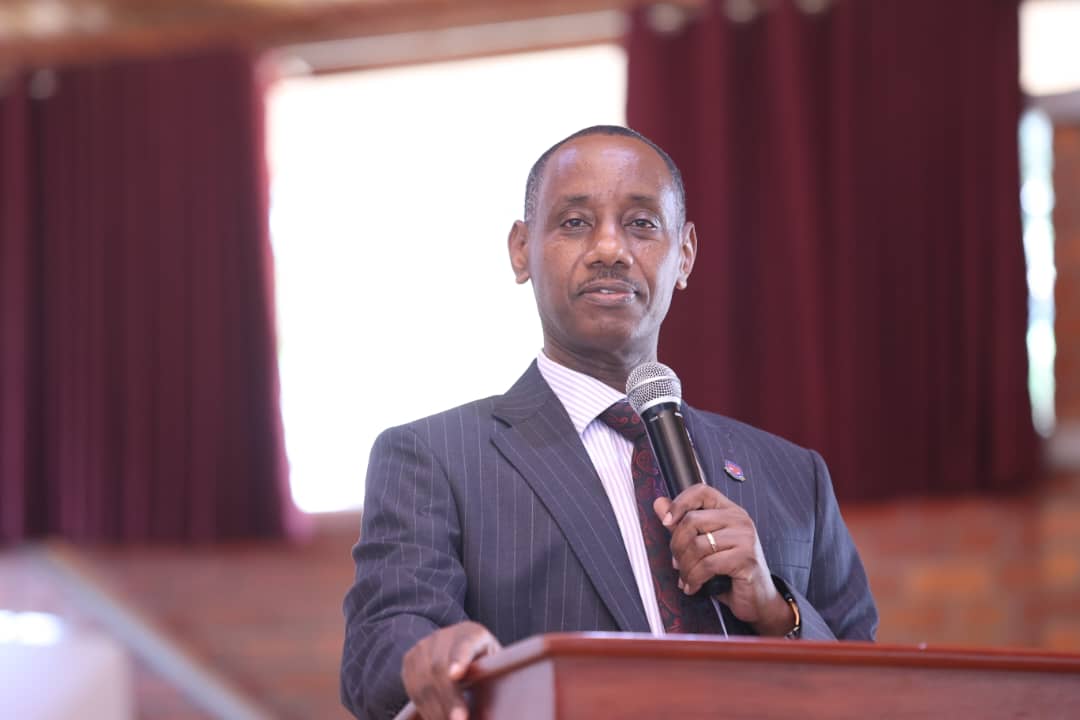
The Vice Chancellor of Uganda Christian University (UCU), Prof Aaron Mushengyezi, has called on surgeons and other health professionals to transform the training of future medical specialists to respond to changing lifestyles and emerging health challenges.
Prof Mushengyezi made the call on Saturday while addressing surgeons gathered at Nkoyoyo Hall at UCU’s Mukono Campus during the closure of the 29th Association of Surgeons of Uganda (ASOU) community outreach, held as part of the 2026 Registrars Symposium.
The symposium was held under the theme, “Closing the Gap for Gastric Cancer Care: Early Detection and Management.”
Prof Mushengyezi said the increasing complexity of health challenges requires medical professionals to rethink how health workers are trained and prepared for service delivery.
“The mandate that you face as health professionals is becoming increasingly complicated. We are dealing with changing lifestyles and emerging health challenges that require us to rethink the way we train and prepare health workers. As a team, we have to respond to these challenges,” he said.
He urged health professionals to combine medical expertise with business, technology and information and communication technology (ICT) to improve training, healthcare delivery and communication.
“We need to bring together business, technology and the skills that you already possess. We should also incorporate techniques that make effective use of ICT tools to improve training, service delivery and communication,” Prof Mushengyezi added.
He further challenged health professionals to move away from traditional approaches that may no longer adequately address the needs of modern healthcare systems.
“We cannot continue doing things exactly as we did in the past. We have to ask ourselves how we can do things differently and better so that we can improve our healthcare system and provide better services to our people,” he said.
Prof Mushengyezi said achieving a healthcare system that works for everyone requires commitment, innovation and fundamental changes in how healthcare is delivered and professionals are trained.
“Having a healthcare system that works for everyone is a dream that we all share. Achieving that dream, however, requires commitment, innovation and fundamental change,” he added.
The Chairperson of the Registrars Symposium and Publicity Officer of ASOU, Dr Gideon Karigamba, said the symposium provides a platform for postgraduate medical students from different universities to exchange knowledge and discuss emerging health challenges as they train to become specialists.
“The purpose of the symposium is therefore to bring together postgraduate medical students from different universities as they train to become specialists. It provides an opportunity for them to discuss current health challenges and share knowledge so that, ultimately, we can improve healthcare services for patients,” Dr Karigamba said.
During the symposium, Dr Irene Alinda from Kabale University highlighted the changing approach to the management of gastric infections, particularly those associated with Helicobacter pylori.
She said medical practice is increasingly shifting from treating gastric infection only after patients develop symptoms to identifying and treating the infection early as part of efforts to prevent gastric cancer.
“For many years, people with gastric infection have been treated mainly when they develop symptoms. However, the approach is now changing from simply managing symptoms to preventing cancer through early identification, treatment and confirmation of eradication,” Dr Alinda said.
She explained that evidence from randomised treatment trials has shown that eliminating H. pylori can reduce the risk of gastric cancer, making eradication an important preventive intervention, particularly in populations where both gastric cancer and H. pylori infection are common.
The 2026 Registrars Symposium marked the climax of a five-day ASOU community outreach programme conducted across the Buganda region.
The outreach covered 10 districts, including Wakiso, Buikwe, Nakasongola and Kayunga, among others, where about 500 health workers participated and approximately 2,500 surgical procedures were conducted.
The annual ASOU community outreach programme has been conducted for the past 29 years, with surgeons and other health workers moving from one region to another to provide surgical services while also supporting communities with health education and specialist care.
Organisers said the next ASOU Registrars Symposium and community outreach will again be held in the Buganda region, citing the region’s large population and geographical size.
