


By Victor Turinawe
The Principal Developer Advocate at Microsoft/GitHub, Henk Boelman, has urged students at Uganda Christian University (UCU) to conduct independent research to confirm the credibility of information obtained from Artificial Intelligence (AI) during their academic pursuits.
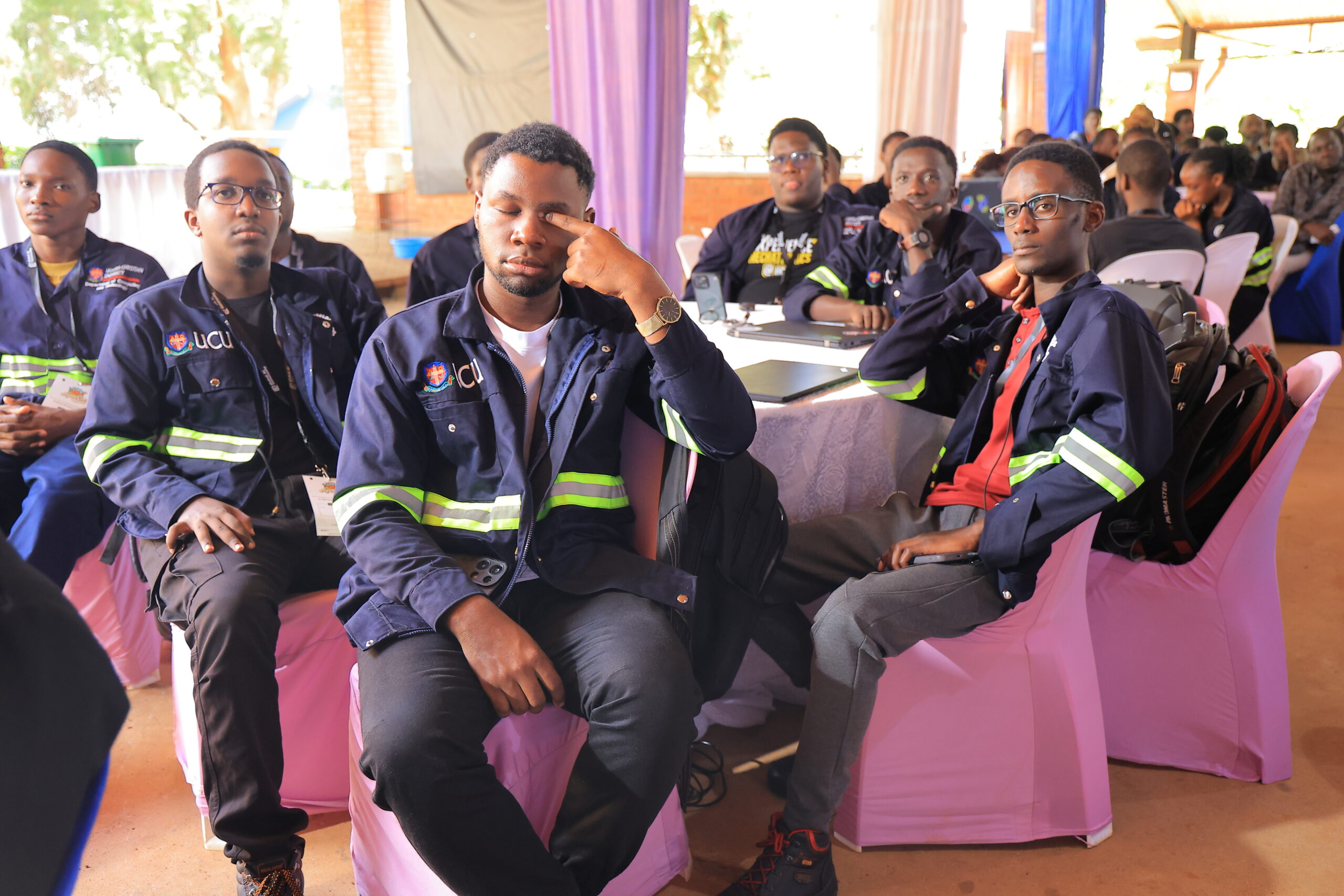
Boelman made the remarks while addressing students from the Faculty of Engineering, Design and Technology (FEDT) at UCU’s Mukono Campus in Nkoyoyo Hall during the AI Agents Developers Conference, held under the theme of the AgentCon World Tour by the Global AI Community.
“Conduct independent research, compare responses from different AI systems, consult other people, and fact-check information online or in libraries because critical thinking remains essential even when using advanced AI tools,” said Boelman.
Boelman also advised students to stay informed by following technology news, joining AI communities, and subscribing to newsletters. He added that students can even create AI agents that automatically monitor and summarise AI-related news updates for them, noting that AI continues to evolve rapidly, with new models, tools, and features being released regularly by companies such as OpenAI and Anthropic.
Mathias Yovani Imani, a web application developer and Computing Science student at UCU as well a panelist during the AI conference, said that major focus should be placed on building trust, safety, and human control over AI system.
“AI should not replace humans but rather assist and empower them. The goal is to create human-centred but scalable AI agents that improve productivity while maintaining safety, transparency, and human oversight,” emphasised Imani.
Emily Musimire, another panellist, encouraged students on AI use by explaining that Artificial Intelligence plays a major role in running projects such as Phalanx, a web-based intrusion prevention system designed especially for institutions struggling with cybersecurity challenges, as traditional systems are expensive to maintain and often vulnerable to attacks. She explained that AI helps the system detect hidden patterns, identify unusual behaviour, and improve security operations automatically.
Sammy Deprez, an independent AI Solution Architect, while presenting on toxicity and bias elicitation, cautioned students about AI bias.
“AI models can unintentionally reinforce stereotypes because they learn from historical internet data. For example, people may automatically associate scientists with men or nurses with women. Such biases can influence AI-generated responses, making fairness and balanced training data essential,” emphasised Sammy.
Bethany Jepchumba, a Cloud Advocate at Microsoft, during her presentation on building agents, reminded students that one important role of AI agents is learning from conversations and user interactions. She explained that agents can ask questions, gather context, and improve how they respond. Jepchunba shared a personal experience from university, where students had to move between multiple offices and departments to process documents such as healthcare forms, library clearances, and professional training requirements, making the process stressful and confusing.
“Agents rely on Large Language Models (LLMs) to analyse information, understand previous actions, and decide which tools or steps are needed next. At the end of the process, the agent delivers results based on its objective and the tools available to it,” emphasised Jepchumba.
Arthur Isingoma, another FEDT student who attended the AI conference, described it as highly important for students, especially those studying Information Technology. According to him, the programme helps students understand how to use AI more effectively and introduces them to different AI technologies that can be used to solve community challenges.
“AI agents can simplify tasks by automating processes and making work easier and faster. Through the programme, students are exposed to innovative projects and ideas developed by others, which motivates them to create their own AI-powered solutions that can positively impact society,” explained Isingoma.
Isingoma further emphasised that AI should not be viewed as “humans versus AI”, but rather as a tool that assists people in improving productivity and completing tasks more efficiently.
