

By Timothy Okurut
On Thursday, March 19th, the Uganda Christian University (UCU) Chaplain, Rev. Canon Paul Wasswa Ssembiro, presided over the Community Worship hour, presenting the message in an unusual format from the custom where he stands on the pulpit to deliver God’s Word. On this day, he had a sit-down session with Dickson Mbonye, a student pursuing a Bachelor of Science in Civil and Environmental Engineering. Mbonye, who once battled an alcohol and cigarette addiction, is now leading a team of other young people to help people break free from similar challenges.
It is this testimony that made him cross paths with Rev. Wasswa. “I was among the best students in my class, I had a religious family with an abundance of love, so someone would ask the question, Why?” he shared.
We were also curious and sat down with Mbonye to find out his story. His question echoes what many people have about the trap of falling into addiction.
“It was a destination I slowly reached but didn’t acknowledge, ” he says, adding that the failure to reach certain goals, both personal and those from the people around him left a certain vacuum that created room for substances in his life. “It was like a temporary escape,” he recalls.
According to Mbonye, the addiction began with alcohol which sent him into a depression, and then cigarettes got into the picture. The substances, he says, made him create illusions of bonding, friendship and happiness. But this new lifestyle did not come without costs. One of the immediate challenges was that after sitting his Advanced Level exams, he wasn’t able to get the required points to enable him enroll for a degree, he had to enroll for a Diploma at Uganda Technical College, Bushenyi.
“Even when joining UCU, I was in and out of class, I wasn’t present in the things I was supposed to be present in.” The addiction also affected his time, resources, relationships and emotions. “Calls with my dad would last about forty seconds,” he says. “My head created this narrative that I was being judged and misunderstood.” Beyond that, he suffered a dead year on campus while battling the addiction. “Emotionally I was drained, I was sad all the time, even if I was high, I felt empty.”
Mbonye shares that addictions come with a huge financial loss, saying that the substances are expensive to use, and the addiction is expensive to treat and recover from. “All these things cost money, the alcohol, cigarettes, weed, pills, and injectables,” he notes. “They’re literally going to dig a hole in your pocket trying to satisfy the craving,” Mbonye adds.
It is not just financial constraints the addictions bring; they also come with health risks.
“When someone drinks their liver to failure, or smokes their blood vessels to failure, like I almost did, it costs money to treat.”
He shares that his healing process began after his second spell at the National Referral Mental Hospital in Butabika. His reflections on his past and present experiences stirred him to desire healing. “Just imagine an environment where you are surrounded by a hundred people who are mentally ill, disconnected from reality, that’s when I found God,” he shares candidly.
In a simple short prayer, he started to reroute his life and today, he’s 22 months clear of the addiction.
He also credits one of his first lecturers, Mr. Andrew Kasumba, the head of the department of Civil and Environmental Engineering for supporting him along his journey. “He used to reach out, those interactions left something in me.”
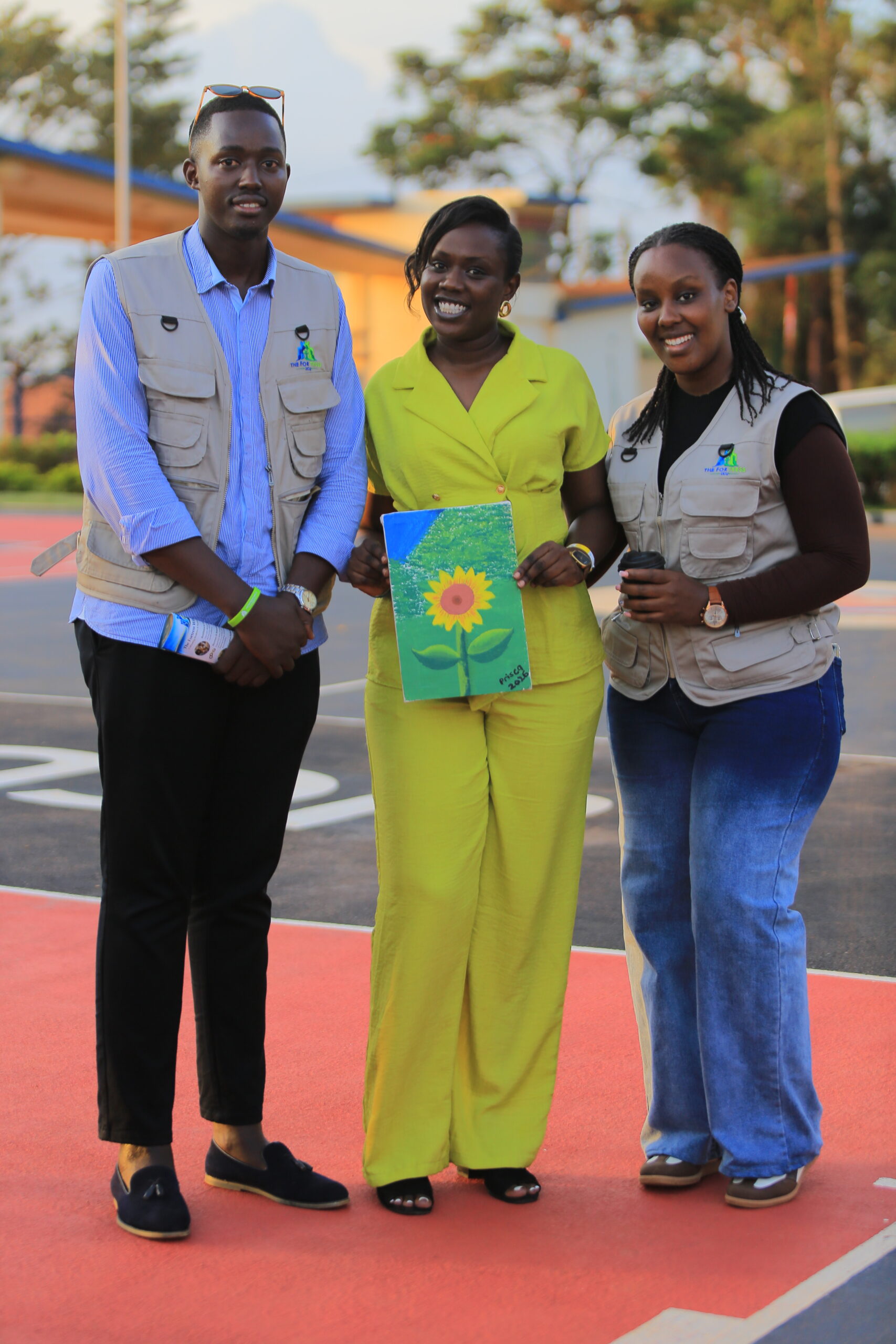
Mr. Rogers Tayebwa also followed him up, tracked him down and ensured he was always found. In giving advice to people battling addictions, Mbonye encourages that they each develop a supportive community to help them fight. “People who have conquered this thing are there, you’re not alone,” he says. “Addiction is one of those battles you can’t win alone, healing starts when you stop hiding.” He has now started a club called “Fortress Within” to help other young addicts out of their addictions.
